

Let’s be honest: dealing with vehicle paperwork isn’t exactly anyone’s idea of a fun afternoon. But if you live, work, or frequently drive in the emirate, getting familiar with Sharjah Muroor is just part of the routine.
Whether you’re buying your first car in the UAE, trying to figure out how to dispute a speeding ticket, or just need to renew your driving license before it expires, you’ll have to go through the local traffic department. The good news? The system has become incredibly streamlined over the last few years, with most services now available right on your phone.
Here is exactly how to handle your traffic and licensing needs in Sharjah without the headache.
What Actually is Sharjah Muroor?
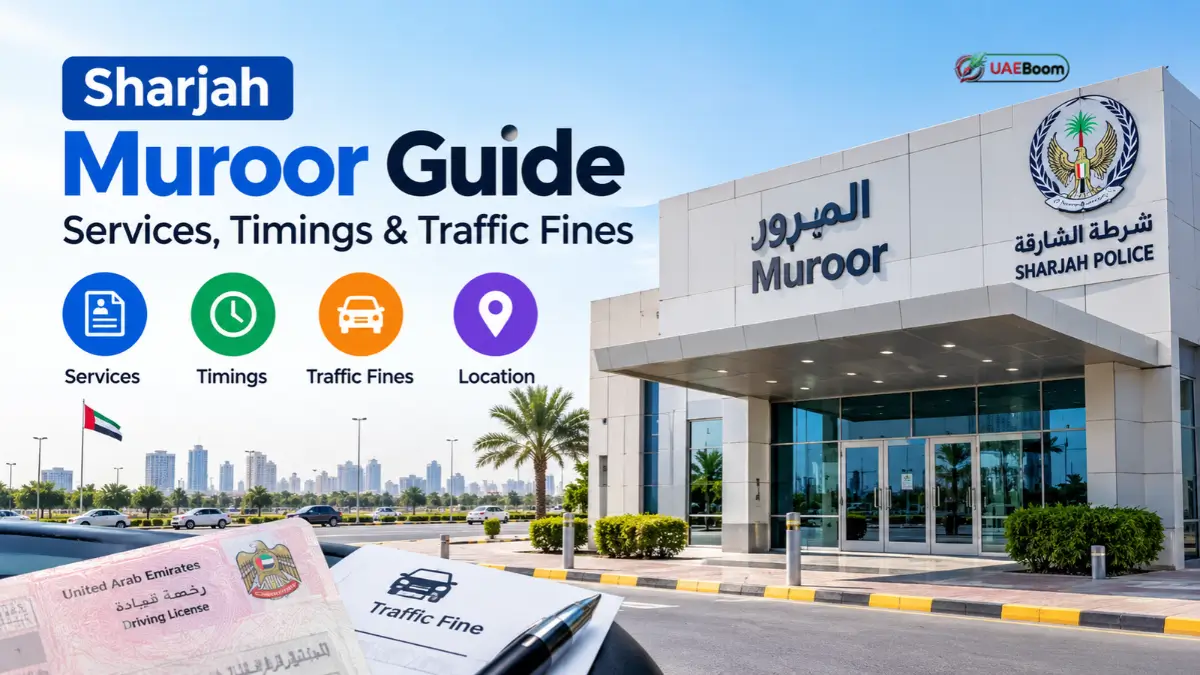
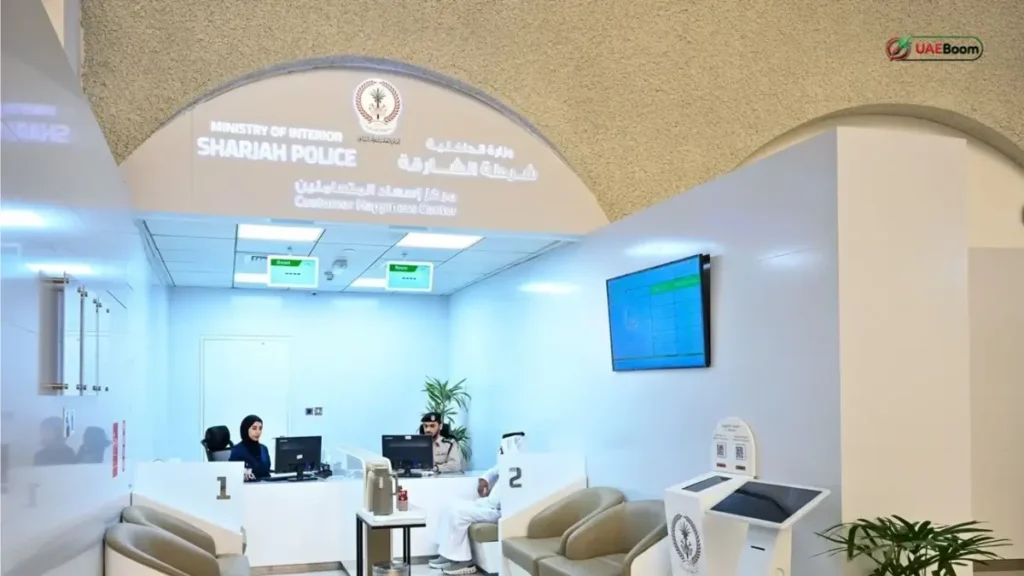
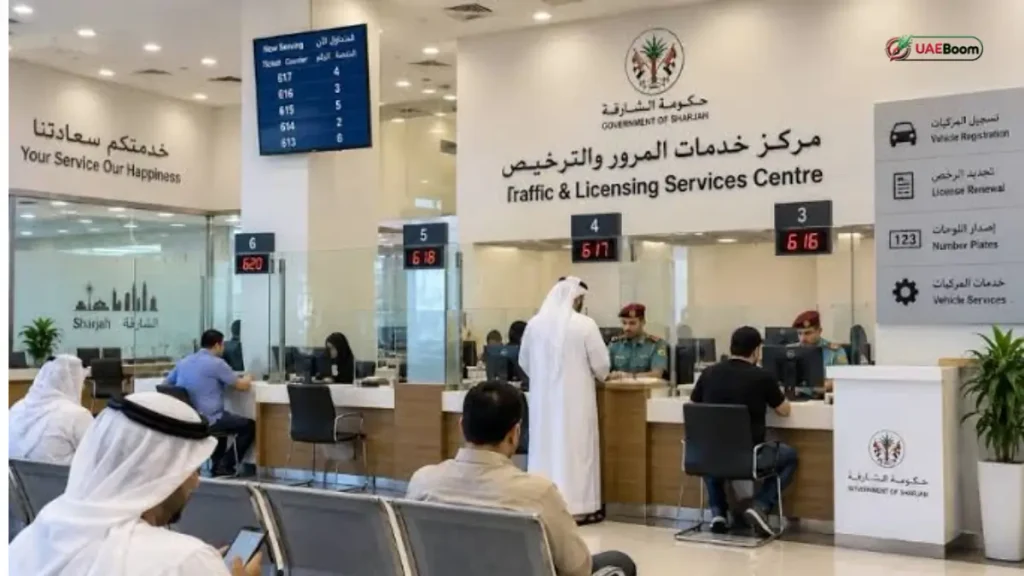
In Arabic, “Muroor” simply means “Traffic.” When people talk about Sharjah Muroor, they are referring to the Sharjah Police Traffic and Licensing Department. This is the main government body that keeps the roads safe, hands out driving licenses, registers vehicles, and, yes, issues traffic fines.
But Sharjah doesn’t operate in a bubble. The department is plugged directly into the federal UAE Ministry of Interior (MOI) system. This means if you run a red light in Dubai or Abu Dhabi, the penalty instantly shows up on your Sharjah traffic file. The federal link makes it impossible to hide from fines, but it also makes paying them and renewing your paperwork much easier from anywhere in the country.
Sharjah Muroor Location and Working Hours
Nothing is worse than driving to a government office only to find the doors locked. While most services are digital now, there are still times when you need to speak to an officer or dispute a complex fine in person.
Where to Go
The main hub for all heavy-duty traffic issues is in the Al-Ramtha area, right next to the Sharjah Police General Headquarters. If you have a complicated issue, this is where you want to go. For routine stuff, they have smaller branches scattered around.
| Branch Name / Area | Primary Focus | Main Services Available |
| Main Office (Al-Ramtha) | Central Operations | License testing, fine disputes, all vehicle registrations |
| Al Ramla Branch | Residential Support | Standard Mulkiya renewals and fine payments |
| Industrial Area 5 | Commercial Zones | Heavy vehicle and commercial fleet registrations |
| Khor Fakkan & Kalba | East Coast Region | General traffic services for eastern emirate residents |
When to Go (Operating Hours)
With the UAE’s recent shift in the working week, government hours have changed. Here is when you can actually get things done:
- Monday through Thursday: 7:30 AM to 3:30 PM. (Get there early. The lines build up fast after 10:00 AM).
- Friday: Closed for the weekend, though you might find automated kiosks working. Stick to the apps on Fridays.
- Saturday and Sunday: Closed.
Keep in mind that during the Holy Month of Ramadan, hours shrink drastically, usually running from 9:00 AM to 2:30 PM. If you just have a quick question and want to save a trip, dial 901 for the non-emergency police call center. Save 999 strictly for actual accidents.
Core Services You Will Actually Use
Sharjah Muroor handles a massive list of administrative tasks, but as a regular driver, you really only care about three main areas.
1. Vehicle Registration (Your “Mulkiya”)
You have to renew your car’s registration every single year. Let it expire, and you are looking at a 500 AED fine, four black points on your license, and the constant paranoia of passing a police patrol.
To get your new Mulkiya (which costs 350 AED for a standard light vehicle), you need to have a few things lined up:
- Your physical Emirates ID.
- A fresh 13-month insurance policy (the extra month is a mandatory UAE grace period).
- A passing vehicle inspection certificate from Tasjeel, assuming your car is more than three years old.
- A zero balance on your traffic fines. You cannot renew your car if you owe the police money.
2. Getting and Keeping Your Driving License
Whether you are an 18-year-old opening your first student file or an expat trying to skip the driving tests, Muroor handles the paperwork.
If you hold a passport and a valid license from a list of recognized countries (like the UK, US, or Australia), you can simply convert your home license to a UAE one by visiting the main branch with a quick eye test report. For everyone else, Muroor manages the testing and issuance process. They also handle your license renewals every few years, which now strictly require an electronic eye test uploaded directly from an approved optical shop.
3. Permits and Clearance Certificates
Need to sell your Sharjah-registered car to a buyer in Dubai? You need a Vehicle Transfer Certificate. Are you opening a business that requires closing off a sidewalk for construction? You need a road clearance permit. Muroor is the entity that issues these specialized No Objection Certificates (NOCs).
Traffic Fines and the Black Point System
The UAE takes road safety incredibly seriously, and they enforce the rules using a mix of heavy fines and “Black Points.”
How Black Points Work?
Think of black points as strikes against your driving record. If you rack up 24 black points within a 12-month window, you lose your license. Depending on how many times you’ve hit that limit, your license could be suspended for months, and you might have to retake driving classes.
What Will Get You Fined in Sharjah?
We all make mistakes, but some are much more expensive than others. Here is a quick look at the most common ways people get ticketed in Sharjah:
| Traffic Violation | Fine Amount | Black Points | Additional Penalties |
| Standard Speeding (up to 20 km/h over limit) | 300 AED | 0 | None |
| Reckless Speeding (over 80 km/h above limit) | 3,000 AED | 23 | 60 days of vehicle confiscation |
| Jumping a Red Light | 1,000 AED | 12 | 30 days of vehicle confiscation |
| Texting / Using Phone While Driving | 800 AED | 4 | None |
| Not Wearing a Seatbelt | 400 AED | 4 | Applies to both driver and passengers |
| Parking in Front of Fire Hydrants | 1,000 AED | 6 | High risk of the car being towed |
A quick note on zero-tolerance policies: Driving under the influence of drugs or alcohol doesn’t just get you a standard fine. It takes you straight to court, usually resulting in maximum black points, massive fines determined by a judge, and in many cases for expats, deportation.
How to Actually Check and Pay Your Fines?
Forget waiting for a letter in the mail. If you get caught by a radar in Sharjah, you usually get an SMS within a few days. But if you want to check your file just to be safe, there are plenty of ways to do it.
The Old School Way
If your fine involves vehicle confiscation or a complicated dispute, you have to show up in person. You can pay fines via debit card at the Al-Ramtha headquarters, at any Tasjeel testing center, or through the MOI self-service kiosks parked in major malls like Sahara Centre.
The Easy Way (Online and Apps)
Nobody wants to stand in line to hand over their money. You can pull up your fine history using your T.C. Number (Traffic Code, found on your license), your license plate number, or your driving license number.
- The MOI UAE App: This is the absolute best way to handle your traffic life. Log in with UAE Pass, and your entire vehicle history, active fines, and black points are right there on the dashboard. You can pay with Apple Pay in about ten seconds.
- Sharjah Police Smart App: Similar to the MOI app but hyper-localized for Sharjah services, allowing you to pay fines or report minor fender-benders without calling a patrol car.
- Emirates Vehicle Gate (EVG): A web portal (evg.ae) that gives you a deep dive into your federal fine history and even lets you check the accident history of a used car before you buy it.
The Push for Digital Services
Sharjah Police has done an excellent job of pushing almost everything online. The days of carrying a thick folder of physical documents are mostly gone.
Through the smart apps, your Mulkiya and driving license are now entirely digital. If you get pulled over, you just show the officer the electronic version on your phone. You can request clearance certificates, generate accident reports for minor scrapes, and clear your penalties from your couch.
If you drive in Sharjah, understanding the Muroor system will save you hours of frustration. The golden rule? Keep an eye on your traffic file, don’t let your registration expire, and take advantage of the digital apps. They were built to make your life easier.
Frequently Asked Questions (FAQs)
1. How do I dispute a traffic fine I didn’t actually commit?
If a radar caught the wrong car or a fine was issued in error, you have to file a grievance. You can initiate this through the Sharjah Police Smart App, but for complex disputes, you will likely need to visit the traffic disputes section at the Al-Ramtha headquarters in person.
2. What do I need to take with me to renew my car registration?
If you aren’t doing it online, you need your physical Emirates ID, the expired registration card (Mulkiya), proof that you bought 13 months of car insurance, and the passing inspection paper from Tasjeel (if the car is over three years old).
3. Can I just convert my home country driving license in Sharjah?
Yes, but only if your passport and license are from an exempt country (like the US, UK, Canada, Australia, and most of the EU). If you qualify, you just bring your original license, ID, and an eye test to Muroor, and they will swap it for a UAE license without making you take a road test.
4. Does Sharjah ever offer discounts on traffic fines?
Yes, they do. Usually around UAE National Day (December 2nd) or during Ramadan, the Sharjah Executive Council sometimes announces a 50% discount on unpaid fines. It’s not guaranteed every year, so keep an eye on the official Sharjah Police Instagram or Twitter accounts.
5. How much does the actual registration renewal cost?
The government fee for renewing a private light vehicle is 350 AED. Keep in mind you also have to pay Tasjeel around 170 AED for the physical car inspection, plus whatever your insurance premium costs.
6. What happens if I actually hit 24 black points?
Your driving license gets suspended. For your first offense, it is usually suspended for three months. If you keep hitting 24 points, the suspensions get longer, and you’ll eventually be forced to go back to a driving institute to take rehabilitation classes.
7. Is there a grace period for an expired car registration?
Yes. You get a 30-day grace period after your Mulkiya expires to get it inspected and renewed. If you get caught driving on day 31, you will be hit with a 500 AED fine and 4 black points.
8. Where do I find my T.C. Number?
T.C. stands for Traffic Code. It is a unified federal number assigned to you as a driver. You can find it printed directly on the front of your driving license and on the back of your vehicle registration card.
9. My car has Sharjah plates. Can I get it inspected and renewed in Dubai?
Absolutely. Because the MOI system is linked federally, you can drive your Sharjah-plated car to an RTA Tasjeel center in Dubai, pass the test, and then renew your registration online through the MOI app.
10. What is the penalty for texting at a red light?
Using your phone while operating a vehicle—even if you are stopped at a red light—will get you an 800 AED fine and 4 black points. The police are increasingly using automated smart cameras at intersections to catch this.